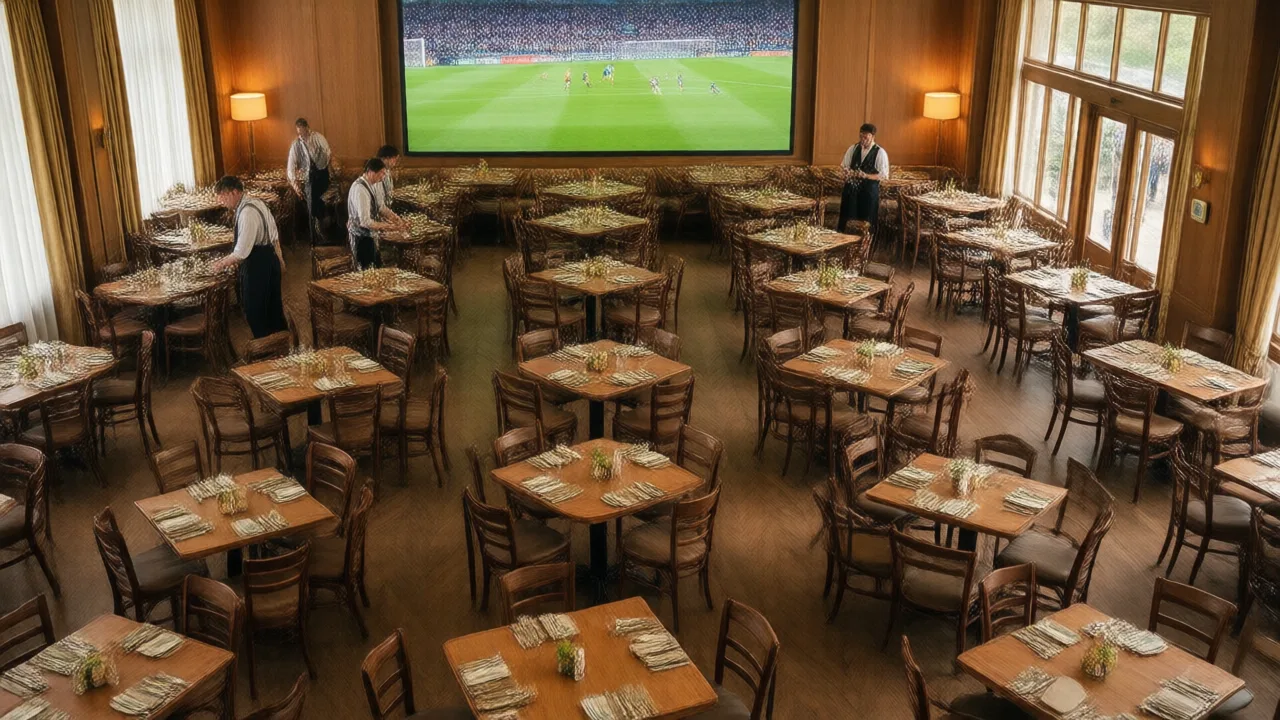
Table Turns in Extra Time: World Cup 2026 Floor Management
Table-turn math assumes guests leave when they finish eating. World Cup guests leave when the referee says so — and this summer, the referee added stoppage time to every seating model in America.
Zone the room by the match clock
Split the floor: match zones with screens where parties camp (price them with minimums or match menus), and quiet zones that keep normal turns for civilians. Seat the match zone before kickoff, pre-bus at the 80th minute, and drop checks at full time — the room turns itself between matches.
Waitlists in the age of extra time
A World Cup match is a 90-minute seating problem with a 30-minute error bar. Tables camp through extra time; the post-match exodus hits your host stand like a halftime whistle. The fixes are mechanical: quote honestly using live table data, page guests to their phones so they can wait at the bar (where they spend), and pre-bus aggressively at the 80th minute.
SMS waitlists beat physical pagers for match crowds — nobody wants to hold a buzzing coaster while celebrating a goal — but physical pagers still win indoors where cell coverage collapses under 500 fans posting the same goal video.
A quick readiness checklist for the final rounds
- Print the remaining match schedule (quarterfinals through the July 19 final) and staff to it.
- Build a two-item "match special" menu that your kitchen can push out fast at volume.
- Turn on order-ahead and pickup time slots to flatten the halftime spike.
- Let an AI agent or overflow service catch the phone; every missed call this month is a missed table of four.
- After each match day, compare sales by hour against a normal week — the delta is your playbook for the 2027 events season.
Ready before the next kickoff?
KwickOS runs the whole floor — POS, kiosks, online ordering and reporting — and KwickPhone answers every call with AI. Want a proven standalone system? KwickPOS powers 5,000+ restaurants with cloud + offline hybrid POS.